
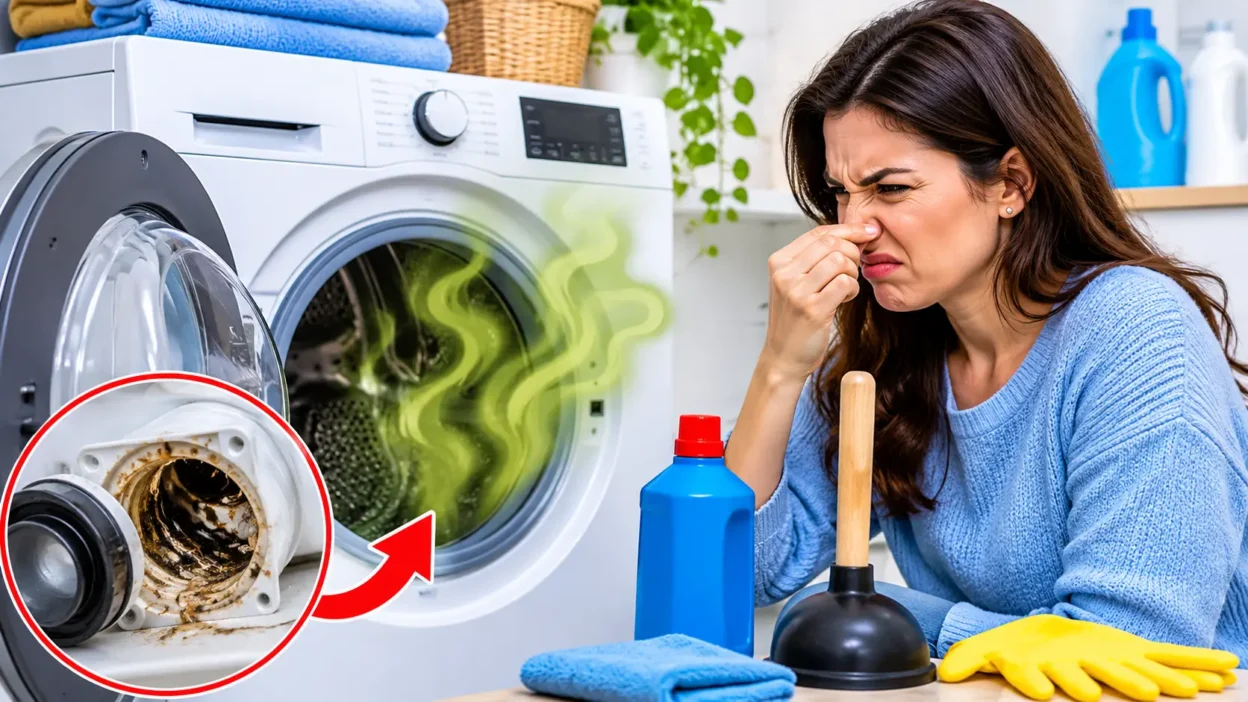
You open the lid to start a load and get hit with a rotten-egg stink. If your washing machine smells like sewage, don’t panic. The cause is usually simple, and you can often fix it yourself in under an hour.
This guide explains why it happens, how to find the source, and how to get your laundry room smelling fresh again.
Why Your Washing Machine Smells Like Sewage
The smell comes from one of two places: the washer itself, or your home’s plumbing.
- Inside the washer: Mold, soap scum, lint, and trapped water create a rotten smell.
- In the plumbing: Sewer gas escapes through the drain pipe your washer connects to.
Sewer gas is a mix of gases made when waste breaks down. It can enter a home through a floor drain or a blocked plumbing roof vent. Knowing which problem you have saves time, so let’s look at each cause.
Common Causes of Washer Drain Odor
1. Dirty Drum, Rubber Gasket, and Drain Filter
Mold and bacteria may develop. As noted by Consumer Reports, bad odors in washing machines and mold in particular have been an issue in front load machines for around 20 years.
Standing water inside the drain pump or drain pipe can cause decay. If water stands for long periods of time organic matter will begin to decay and produce a smell like rotten eggs.
2. Clogged Drain Hose or Standpipe
Hair, lint, and sock fuzz build up in the drain hose or the wall pipe (the standpipe). Wastewater then sits and stinks. You may also notice slow draining or gurgling sounds.
3. Blocked Plumbing Vent
Your plumbing has vent pipes that run up through the roof. They let air in so water flows smoothly. When a vent clogs with leaves, a bird’s nest, or debris, the draining washer can pull water out of the trap and push smelly air into your laundry room. A blocked vent often causes odors at other drains, too.
Washing Machine Drain Trap Smell: The Most Common Culprit
What Is a P-Trap?
The trap (P-trap) underneath your washing machine always contains some water, preventing sewer gases entering your property.
However, if the water is evaporated, sewer gas can enter your property. If the trap within a sewer drain has dried out, hydrogen sulphide gas can be released into your property. This can occur as the washing machine isn’t used often, if you are away on holiday, or if there is a problem in the venting causing water to be siphoned out.
How to Fix a Dry Trap
The fix is easy. Pour about a gallon of water down the standpipe, or run a rinse cycle. Running water through the drain refills the P-trap, and using your washer regularly keeps it from drying out.
If the smell returns within a day or two, the trap may be leaking or being siphoned dry. That points to a vent or pipe problem.
Sewer Smell From Washer: Is It the Machine or the Plumbing?
Try this quick test:
- Sniff inside the empty drum. A musty, sour smell means the washer needs cleaning.
- Sniff near the drain pipe behind the washer. A sewage smell here means a plumbing issue.
- Notice when it happens. If the stink shows up only while the washer drains, suspect the trap or vent.
- Check other drains. Smells from sinks or floor drains, too, point to the vent or main sewer line.
Step-by-Step Fixes
Clean the Washer Itself
Run a hot, empty cycle with a washer cleaner tablet, or follow your manual’s advice for vinegar or baking soda. Whirlpool’s brand manager suggests cleaning your machine about once a month, or every 30 cycles.
Safety tip: Never mix bleach and vinegar. The mix creates dangerous fumes.
Also wipe the rubber gasket and soap drawer, since hair and scum collect there.
Clean the Drain Pump Filter
Most front loaders have a small filter near the bottom front. Place a towel and shallow pan under it, unscrew it slowly, and remove the gunk. Check your manual for the exact spot.
Refill the P-Trap
Pour water down the standpipe as described above. For a seldom-used floor drain nearby, add water monthly.
Clear the Drain Hose and Standpipe
Unplug the washer, pull the hose out, and check for clogs. Use a drain snake on the standpipe if water drains slowly.
Check the Vent
If you suspect a blocked vent and you’re comfortable on a ladder, look for debris at the roof opening. Otherwise, call a plumber. Roof work isn’t worth a fall.
Is Sewer Gas Dangerous?
Even if the smell is mild, you should still take it seriously. While very small amounts of hydrogen sulphide in the air may not affect your health, these levels can still cause irritation to your eyes, nose and throat, dizziness and sleepiness in Wisconsin. (Illinois Department of Public Health)
Flammable
If you are getting a strong smell, feeling unwell, or getting headaches which improve once you leave your house, open windows, go outside and contact a professional.
How to Prevent Washer Odors
- Use less detergent, especially in HE washers.
- Leave the door or lid open after loads so the drum dries. Skip this if small kids or pets are around.
- Wipe the gasket after your last load of the day.
- Run a cleaning cycle monthly.
- Run water down rarely used drains each month.
- Remove wet laundry promptly.
When to Call a Plumber
Call a pro if:
- The smell returns after you refill the trap.
- Several drains in your house smell.
- You hear gurgling from toilets or sinks.
- Water backs up near the washer.
- You suspect a cracked pipe or a main sewer line problem.
A plumber can use a camera to find hidden leaks, vent blockages, or sewer line damage.
FAQs
Why does my washing machine smell like sewage only sometimes?
A partly blocked vent or a trap that dries out between uses can cause on-and-off odors.
Can a front-load washer smell worse than a top-load?
Often, yes. The rubber door seal traps moisture, so mold grows more easily.
Will vinegar fix a sewer smell from the washer?
It helps if the smell is mold inside the drum. It won’t fix a dry trap or blocked vent, because the gas comes from the pipes.
Final Thoughts
Start by cleaning the machine, refilling the trap and cleaning the filter and hose. If you still get a sewage smell coming from the washing machine drainage, then it is likely that you need to get a professional in to check the vent and pipework. Spotting this problem early will ensure that your washing smells nice, and that your house is safe.