Quick Answer: Shigella infection (shigellosis) is a bacterial illness that mainly causes diarrhoea, stomach cramps, and fever. It spreads through contaminated food, water, or contact with an infected person’s stool. Most people get better on their own in 5 to 7 days, but young children, older adults, and people with weak immune systems should see a doctor if symptoms are severe or last too long.
What Is Shigella Infection?
Shigella is a bacterial infection that causes an intestinal disease known as shigellosis. It is among the leading causes of diarrhoea in the United States with an estimated number of 450,000 – 500,000 cases annually according to the Center for Disease Control (CDC). Shigella is a group of bacteria that causes intestinal infections with almost 40 serotypes that differ in virulence. The bacteria can be found in four species with over 40 serotypes that vary in severity.
The infection is also referred to as bacillary dysentery. Although the name may sound frightening, the infection is only a mild stomach illness for most people who are otherwise healthy.
Common Symptoms of Shigella Infection
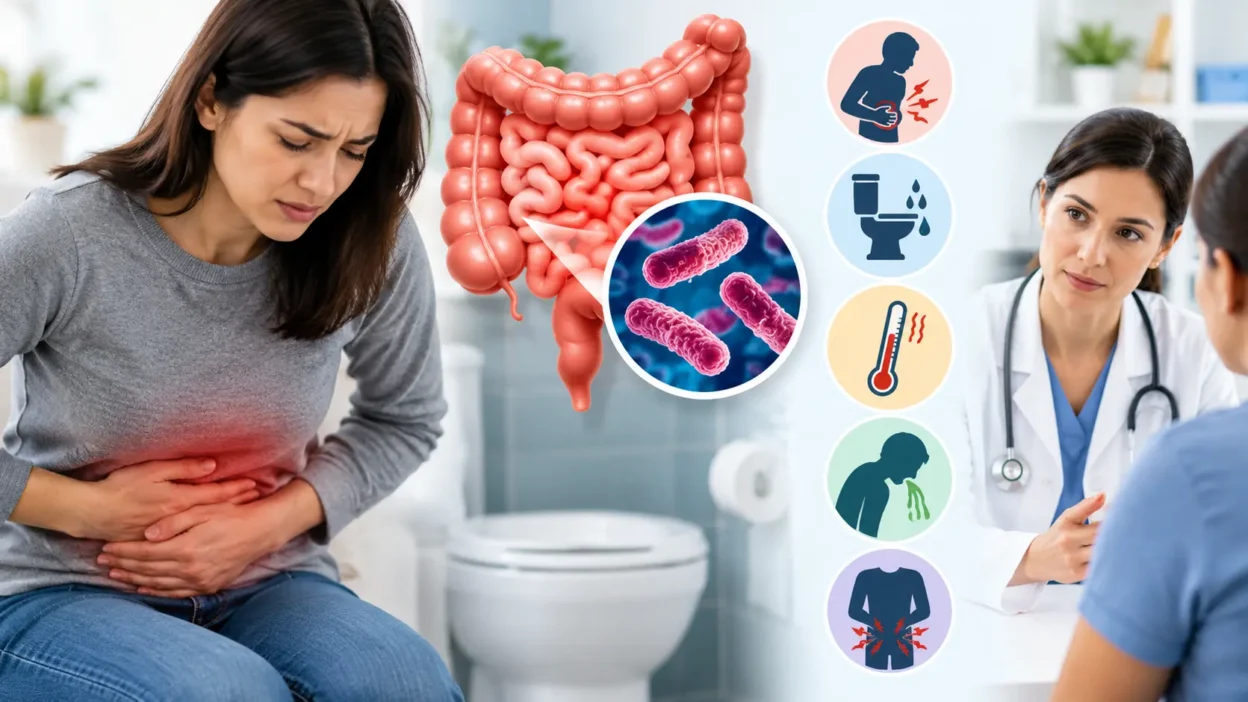
Symptoms usually show up fast — often within a day or two of coming into contact with the bacteria. Here’s what to look out for:
- Diarrhoea, which can sometimes contain blood or mucus
- Stomach pain or cramping
- Fever
- Nausea
- A constant urge to use the bathroom, even when nothing’s there (doctors call this tenesmus)
- Headache, in some cases
People who get sick from Shigella usually start experiencing symptoms 1 to 2 days after contact with the germ, and symptoms typically last 5 to 7 days, though some people may have symptoms for anywhere from a few days to 4 or more weeks.
Quick Answer: Not everyone who catches Shigella feels sick. Some people infected with the bacteria won’t have any symptoms at all — but they can still pass it on to others, which is one reason it spreads so easily.
How Does Shigella Spread?
Shigella is sneaky because it only takes a tiny amount of the bacteria to make someone sick — far less than most other foodborne germs. It spreads mainly through what’s called the “faecal-oral route,” which simply means bacteria from an infected person’s stool ends up in someone else’s mouth. That can happen through:
- Dirty hands — touching contaminated surfaces, then touching your mouth or food
- Contaminated food — prepared by someone who’s infected and didn’t wash their hands properly
- Contaminated water — swallowing recreational water, like pool or lake water, that’s been contaminated with Shigella germs
- Close personal contact — common in daycare centres, households, and among sexual partners
Children under 5 are especially likely to catch it, partly because they’re more likely to put their hands in their mouths and are in close contact with other kids in daycare or preschool settings. Children under age 5 are most likely to get a Shigella infection, though it can happen at any age.
Is Shigella Dangerous?
For most otherwise healthy people, no — it clears up on its own without any lasting damage. But it isn’t always harmless. In rare cases, it can lead to:
- Post-infectious (reactive) arthritis — joint pain, eye irritation, and painful urination, which affects about 2% of people infected with Shigella flexneri
- Seizures in young children, usually linked to high fever rather than the infection itself
- Bloodstream infections, if the bacteria gets through a damaged intestinal lining
- Haemolytic uraemic syndrome (HUS), a rare but serious kidney complication, mostly tied to one specific species
There’s also a growing concern worth knowing about: drug-resistant Shigella. Cases of drug-resistant Shigella have been rising sharply in the US, going from nearly 0% between 2011 and 2015 to 8.5% by 2023. This makes prevention and early action even more important.
When to Seek Medical Help
Most cases don’t need a hospital visit, but you should contact a doctor if you or your child:
- Have diarrhoea that contains blood
- Have a high fever that won’t come down
- Show signs of dehydration (very little urine, dry mouth, dizziness, sunken eyes)
- Have diarrhoea lasting more than a few days with no improvement
- Are very young, elderly, pregnant, or have a weakened immune system
Quick Answer: The biggest risk with Shigella isn’t usually the infection itself — it’s dehydration from fluid loss. Drinking plenty of fluids is one of the simplest and most effective things you can do while you recover.
How Is Shigella Treated?
Here is some good news for you: Most people recover from a Shigella infection within 5 to 7 days, even without treatment. If your case is mild, you may not need any treatment at all. On the other hand, you should not take antibiotics on your own initiative: Due to antibiotic resistance, doctors will rather prescribe them in severe cases than otherwise. Always consult your physician.
How to Prevent Shigella Infection
A few simple habits go a long way:
- Wash your hands properly with soap and water, especially after using the bathroom and before preparing food
- Avoid preparing food for others while you have symptoms
- Keep young children’s toys and surfaces clean and disinfected
- Avoid swallowing water while swimming in lakes, pools, or hot tubs
- Wait until symptoms have fully cleared before resuming sexual contact, as advised by the CDC
The Bottom Line
Shigella infection is common, highly contagious, and usually mild — but it’s not something to ignore completely, especially with antibiotic-resistant strains becoming more common. Good hygiene is your best defence, and if symptoms are severe, bloody, or dragging on, it’s worth getting checked out rather than waiting it out.