| Quick answer: Ultra-processed food is food that’s been through so much industrial processing, and has so many added ingredients, that it barely resembles the plant or animal it came from. Think fizzy drinks, packaged biscuits, instant noodles, and most breakfast cereals. Eating a lot of it over the years is linked to a higher risk of heart disease, type 2 diabetes, certain cancers, and even faster brain ageing. |
That’s the short version. Now let’s unpack what it actually means, because the label gets thrown around a lot without much explanation.
What Does “Ultra-Processed Food” Actually Mean?
Scientists classify foods into four categories according to the NOVA classification system. The first category includes unprocessed or minimally processed foods, such as fresh vegetables and cereals. The fourth category consists of ultra-processed foods (UPF). UPFs are industrially produced foods with ingredients that are not typically found in home kitchens.
For example, a food product with five or more ingredients most likely belongs to the fourth category. This is because ultra-processed foods usually have various additives such as emulsifiers, flavor enhancers, and coloring agents. On the other hand, a homemade bread made of flour, water, yeast, and salt is an unprocessed food product. However, most commercial breads, such as white sliced bread are ultra-processed foods because they contain preservatives, dough conditioners, and sweeteners.
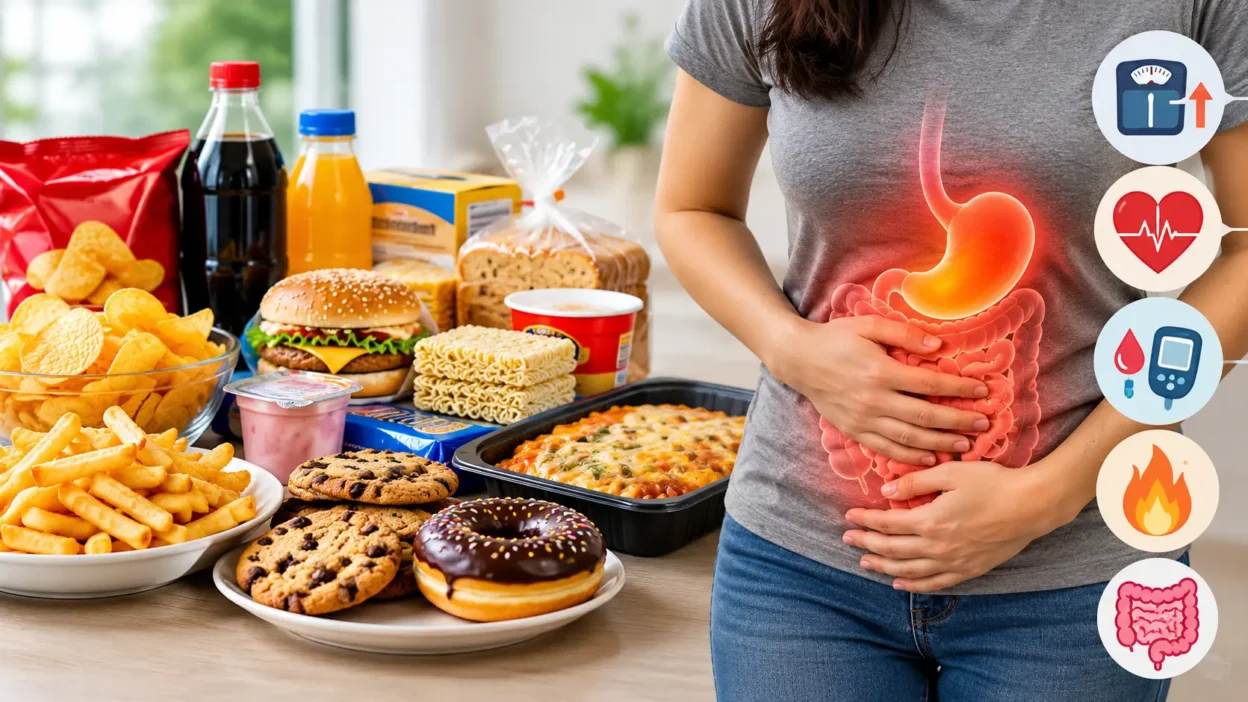
Common examples include:
- Fizzy drinks and energy drinks
- Packaged crisps, biscuits and cakes
- Instant noodles and ready meals
- Most breakfast cereals, even the ones marketed as “healthy”
- Processed meats like sausages, hot dogs and deli slices
- Flavoured yoghurts with added syrups and thickeners
How Much Ultra-Processed Food Do People Actually Eat?
More than you’d think. In the US and UK, ultra-processed food makes up roughly half of daily calories for the average adult, and even more for teenagers. A 2026 Australian study found participants got about 41% of their daily calories from UPFs — and that’s close to the typical Western pattern too. This isn’t a niche problem. It’s the default way most people eat now, often without realising it.
Does Ultra-Processed Food Actually Cause Health Problems?
This is the part people genuinely want answered, and the evidence has got a lot stronger recently.
A major three-part review published in The Lancet in late 2025, written by 43 international researchers, concluded the science is now solid enough to justify public health action, not just more debate. That’s a strong statement from a cautious field.
Here’s what the research links UPF intake to:
Heart disease and high blood pressure. A large review of 41 studies found that every extra 100 grams of ultra-processed food eaten per day was tied to a 14.5% higher risk of high blood pressure and a 5.9% higher risk of cardiovascular events.
Type 2 diabetes. Pooled studies from Korea and elsewhere show a clear dose-response pattern — the more UPF in the diet, the higher the diabetes risk, independent of body weight.
Cancer. The same large review tied UPF intake to a 1.2% rise in cancer risk per 100 grams daily. Separately, a Nurses’ Health Study analysis found a 45% higher rate of early-onset colorectal growths among women with the highest UPF intake, regardless of their BMI or overall diet quality.
Brain health and focus. A Monash University study from June 2026 found that for every 10% increase in ultra-processed food intake, people showed a measurable drop in attention and mental processing speed — even those eating an otherwise healthy, Mediterranean-style diet.
Faster biological ageing. UK Biobank data from over 172,000 people linked higher UPF intake, particularly from sugary drinks and artificially sweetened products, to accelerated biological ageing and higher all-cause mortality.
Weight gain, regardless of calories. A 2025 randomised controlled trial found UPFs caused weight gain and disrupted metabolic and reproductive health even when calorie intake was matched against a whole-food diet. That’s an important finding — it suggests something about processing itself, not just calories, is doing the damage.
Why Would Processing Alone Cause Harm?
Good question, and researchers are still working out the full mechanism. A few theories are gaining ground:
1. Food additives disrupt gut bacteria. Mice studies show common emulsifiers can alter gut microbiota across generations, raising susceptibility to metabolic and inflammatory disease.
2. Processing changes how fast you eat. Soft, pre-chewed textures mean meals get eaten faster, which can override your body’s natural fullness signals.
3. Energy density tricks your appetite. UPFs pack more calories into less volume, so you can eat more before feeling full.
What Can You Actually Do About It?
You don’t need to cut out every packaged item overnight — that’s not realistic, and nobody manages it long-term anyway. A few practical shifts matter more than perfection:
- Check the ingredients list, not just the calorie count. Long lists with unfamiliar additives are a red flag.
- Swap one ultra-processed meal a day for something simple — plain yoghurt instead of a flavoured one, whole fruit instead of a cereal bar.
- Cook in batches on weekends so a quick homemade option beats the convenience of a ready meal.
- Don’t trust “healthy-sounding” packaging. Protein bars, flavoured oat milks and low-fat yoghurts are very often still ultra-processed.
Frequently Asked Questions
Is all processed food bad for you?
No. Processing itself isn’t the enemy — canned beans, frozen vegetables and plain tinned fish are processed but not ultra-processed, and they’re perfectly healthy. The concern is specifically with industrial formulations high in additives, refined starches and added sugar.
How do I know if something is ultra-processed?
Check the ingredients label. If you see five or more ingredients, including things like emulsifiers, artificial flavourings, or preservatives you don’t recognise, it’s almost certainly ultra-processed.
Can eating ultra-processed food occasionally still be fine?
Yes. The strongest evidence points to harm from high, regular intake over years, not from having crisps at a party. It’s the pattern that matters, not a single meal.
Does ultra-processed food affect children differently?
Yes, evidence suggests children and teenagers who eat high amounts of UPFs face greater risks to weight, metabolic health and even dental health, partly because UPFs often make up a larger share of their daily calories.
What’s the single biggest ultra-processed food to cut first?
Sugary drinks are usually the easiest win — they offer no nutritional benefit, are strongly linked to weight gain and metabolic disease, and are simple to swap for water or plain tea.