
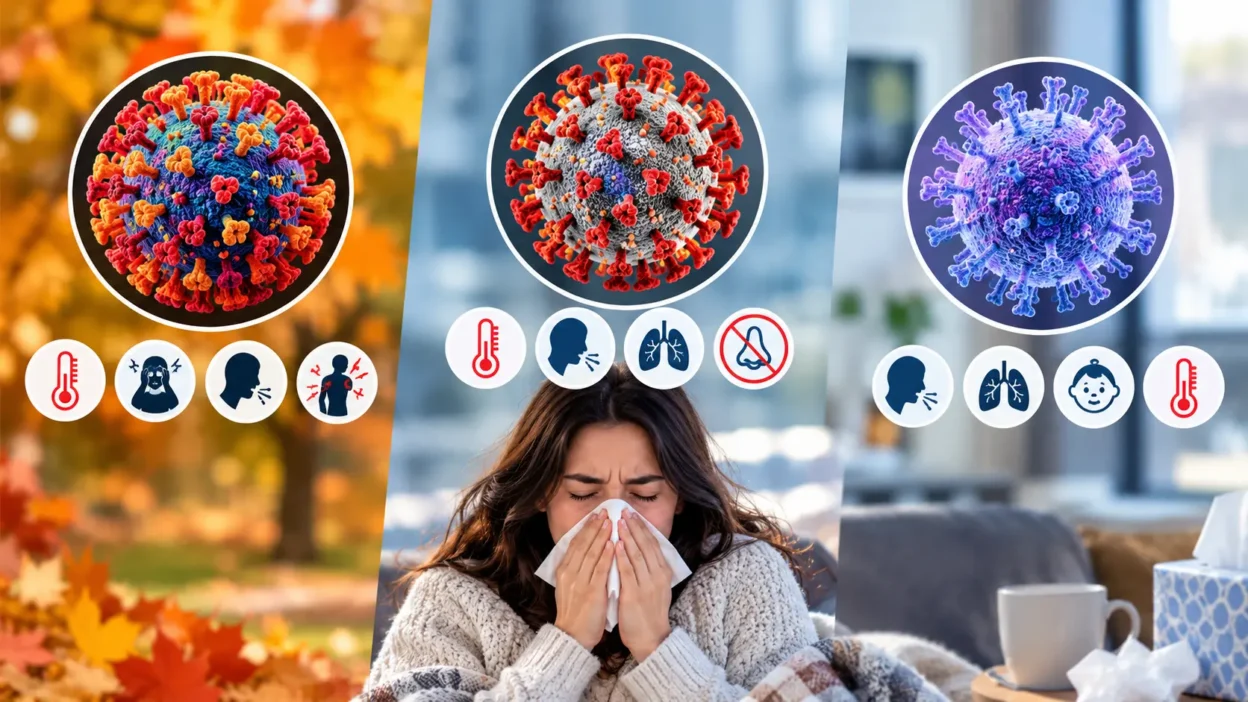
When looking at flu vs COVID vs RSV fall 2026, cough, runny nose, and feeling tired all day might sound all too familiar. Every autumn, millions of people catch some kind of respiratory bug, and it’s genuinely hard to tell which one just moved in. This year is no different — and in some places, it’s arriving earlier than usual.
Here’s a plain-English breakdown of what’s going around, how to tell the three apart, and what actually helps.
Quick Answer: What’s Different About Flu, COVID and RSV in 2026?
- Flu is showing up earlier than normal this season — activity hit its highest mid-September level since 2022, roughly seven weeks ahead of the past two years.
- COVID-19 is expected to behave similarly to last year, with hospital numbers likely staying flat or even dropping slightly.
- RSV should follow a familiar seasonal pattern too, though it tends to peak a little later than people expect.
In short: nothing wildly new, but flu got here early, so it’s worth paying attention sooner rather than later.
Flu: Hitting Hard and Hitting Early
The flu is most notable for its rapid onset. One day you feel perfectly healthy, the next you are shivering on the toilet seat with a fever so high it’s threatening to liquefy your sinuses.
What makes this fall remarkable, though, is the timing of the spike. Health-record data suggest that flu season may be arriving earlier than usual and catching many unprepared, before they’ve had a chance to get their annual vaccination. Authorities are now urging that people not wait until November to get vaccinated because it takes about two weeks for the shot to become effective.
Typical flu signs:
- Sudden high fever and chills
- Severe body aches
- Headache
- Dry cough
- Feeling utterly drained
COVID-19: Still Around, Just Quieter
COVID hasn’t gone away, but it’s no longer the main event it once was. Health officials expect this season’s COVID hospital numbers to stay similar to, or even lower than, last year’s — a sign that population immunity from past infections and vaccines is holding up.
That doesn’t mean it’s harmless. COVID can still knock healthy people off their feet for a week or more, and it remains riskier for older adults and anyone with underlying health conditions.
Typical COVID signs:
- Fever (though sometimes mild or absent)
- Cough and sore throat
- Loss of taste or smell (less common with newer strains, but still happens)
- Tummy troubles like nausea or diarrhoea
- Fatigue that can drag on longer than flu fatigue
RSV: The One Parents and Grandparents Should Watch
RSV (respiratory syncytial virus) often gets overlooked because, for most healthy adults, it feels like an ordinary cold. The real risk is at the two ends of life — babies under one year old and adults over 65.
Unlike flu, RSV tends to build up slowly over four to six days rather than hitting all at once. Last season’s RSV peak actually arrived later than historical patterns, and health officials expect something similar this year.
Typical RSV signs:
- Runny or stuffy nose
- Mild cough that can turn into wheezing
- Decreased appetite, especially in infants
- In babies: rapid breathing, pauses in breathing, or trouble feeding — these need urgent medical attention
Flu vs COVID vs RSV: Simple Comparison Table
| Flu | COVID-19 | RSV | |
| Onset | Very sudden (hours) | Gradual (2-14 days) | Gradual (4-6 days) |
| Fever | Very common, often high | Common, variable | Common, especially in children |
| Body aches | Severe | Common | Mild or rare |
| Loss of taste/smell | Rare | Sometimes | Rare |
| Most at risk | Everyone, especially older adults | Older adults, underlying conditions | Infants and adults 65+ |
| Vaccine available | Yes | Yes | Yes (older adults, infants, pregnant people) |
Since symptoms overlap so much, a home test is often the quickest way to know what you’re actually dealing with.
When Should You Get Tested?
Quick answer: if symptoms are more than mild, or you’re around someone vulnerable (a baby, an elderly relative, someone immunocompromised), it’s worth testing.
A simple rule doctors use:
- Came on like a truck, fever and aches? Likely flu.
- Started slow, could be anything, maybe lost your sense of taste? Test for COVID.
- Young child with a worsening wheeze or laboured breathing? Could be RSV — call a doctor.
Vaccines: Who Needs What This Fall
- Flu shot: Recommended for everyone aged 6 months and up. October is the ideal window, since protection fades as the season goes on.
- COVID vaccine: Recommended for adults, especially those over 65 or with health conditions that raise their risk.
- RSV immunisation: Recommended for adults 65 and older, pregnant people (to protect the newborn), and infants.
If you’re not sure which ones apply to you, a quick chat with a pharmacist or GP takes five minutes and clears up any confusion.
When to Seek Urgent Care
Don’t wait it out if you notice:
- Trouble breathing or persistent chest pain
- A fever that won’t come down with medication
- Blue-tinged lips or fingernails
- Confusion or extreme drowsiness
- In babies: pauses in breathing, poor feeding, or fewer wet nappies than usual
The Bottom Line
Flu, COVID and RSV will all be circulating this fall, and flu has arrived earlier than it has in years. The good news: the basics haven’t changed. Get vaccinated where it applies to you, test when symptoms are unclear, wash your hands often, and stay home when you’re unwell so you’re not passing it along to someone more vulnerable.
Helpful Resources
- CDC: 2026-2027 Respiratory Disease Season Outlook
- CDC: Respiratory Virus Season Insights
- Cleveland Clinic: Difference Between RSV, Flu and COVID-19
- Healthline: Flu vs COVID vs RSV Symptom Comparison
This article is for general information only and isn’t a substitute for medical advice — if you’re worried about your symptoms, please speak with a doctor or pharmacist.