Election season always brings the same question to millions of Americans: “Where do I actually go to vote?” Maybe you moved last year. Maybe your usual spot changed. Or maybe this is your first time voting and you have no idea where to start. Whatever the reason, finding where to vote doesn’t have to be stressful. This guide walks you through exactly how to find your polling place for the 2026 elections, using simple, trusted tools that take less than a minute.
When Is the 2026 Election?
The 2026 midterms include Senate races and 39 State Governor races. These will be on the 3rd of November 2026. There are Primary elections for many states so check your state election dates to see if you can vote for them. Some states have held Primaries as early as March. Others throughout the summer and autumn.
Why Your Polling Place Might Have Changed
Many voters will assume that they vote at the same location as they did last time. This is often the case. However, some voting places change between elections. If you have moved house or your name has changed on your ID then there may be changes to your registration details. Sometimes the county will change locations due to a school closing, renovation work on a building or a change of precinct boundaries. It is always best to check where you need to vote each election.
How to Find Your Polling Place: Step-by-Step
1. Use an Official Polling Place Locator
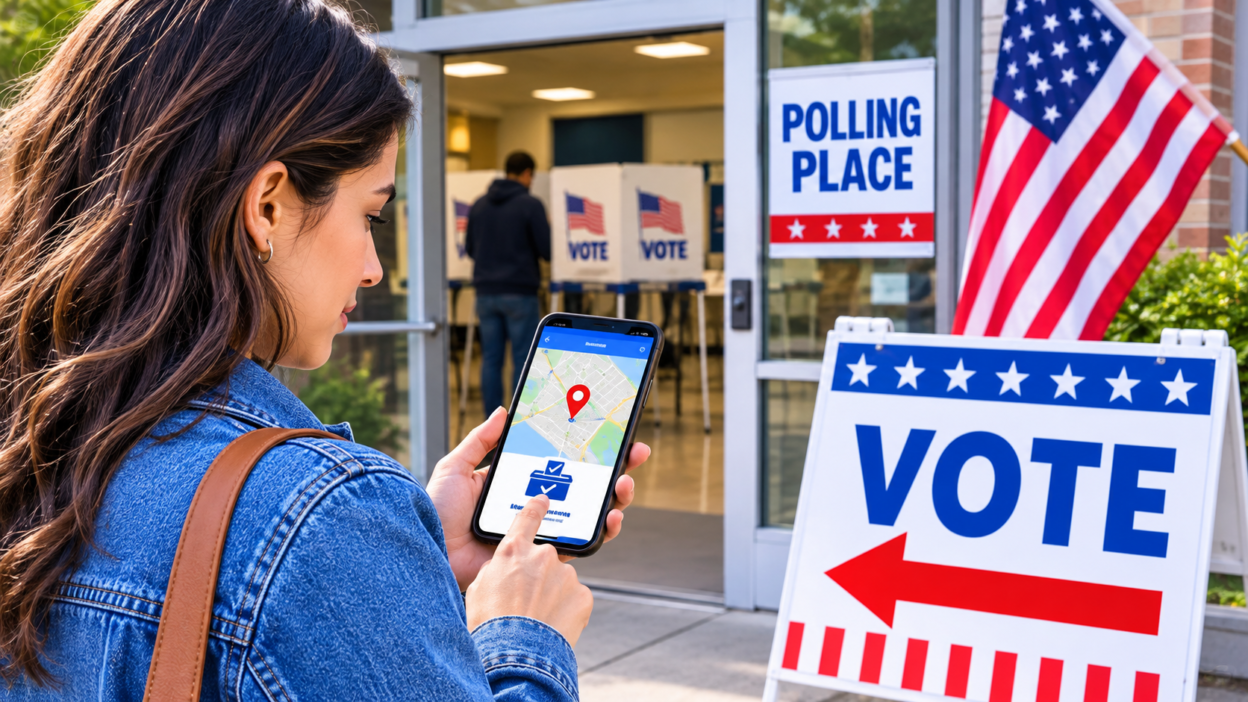
The fastest and most reliable way to find voting locations USA-wide is through a trusted, nonpartisan tool. Vote.org runs a polling place locator that’s free and available to every registered voter. All you need is your home address, and it will show you your exact assigned location, along with hours and directions.
2. Check Your Secretary of State’s Website
Each state has a Secretary of State (or equivalent) which houses an online voter lookup. For example, in Alabama you can go to the Secretary of State website, click ‘My Voting Information’, enter your home address and it will tell you where your polling station is. The majority of states have a similar style so by searching ‘[your state] Secretary of State voter lookup’ you should get there.
3. Try the National Association of Secretaries of State Tool
If you’re not sure which state tool to use, the National Association of Secretaries of State offers a “Find Your Polling Place” resource that connects you with the right state lookup tool or local election official. This is a great starting point if you’re unfamiliar with your local election system.
4. Just Search It
Sometimes the simplest option works best. An even easier way to find your local polling place is to search for it directly online, since search engines often pull polling data straight from official election sources.
5. Check Your County Election Office
County websites often have the most detailed and updated information, especially closer to Election Day. Many counties, like San Bernardino County in California, run their own polling place and voter information guide lookup tools that cover both early voting locations and Election Day sites.
Early Voting: Vote Before the Crowds
If you’re not keen on going to vote in the polls on Election Day (Tuesday, November 3), then consider early voting. Many areas will start their polls weeks before Election Day. You should check your local state/county elections website. This will tell you the exact dates for early voting, what times it is open and if there are any specific requirements such as showing ID. The location of the early voting and Election Day polling stations could be very different from each other so bear that in mind.
Quick Checklist Before You Head to Vote
- Confirm your voter registration is current and active
- Look up your specific polling location (not just the one you remember)
- Check if your state requires photo ID
- Note the hours — some states open polls earlier or close later than others
- If voting early, confirm the separate early voting site and schedule
- Bring your sample ballot if you received one, so you’re ready to go
Common Mistakes Voters Make
Assuming nothing changed. Redistricting, building closures, and address updates happen more often than people expect.
Mixing up early voting and Election Day locations. These are frequently two different buildings.
Waiting until the last minute. Registration deadlines and mail-ballot cutoffs vary by state, so checking early saves stress.
Not updating your address. If you moved, even within the same city, your assigned polling place likely changed too.
Helpful Resources
- Vote.org Polling Place Locator
- USA.gov Voting and Elections
- National Association of Secretaries of State
Your state’s official Secretary of State website
FAQs
1. How do I find out where to vote?
The easiest way is to enter your home address into an official polling place locator like Vote.org or your Secretary of State’s website. It will show your exact assigned location in seconds.
2. Can I vote anywhere, or do I have to go to a specific location?
In most states, you’re assigned a specific polling place based on your home address. Some states offer “vote anywhere” centers, so check your local rules to be sure.
3. What if my polling place changed since last time I voted?
This happens more often than people realize. Always recheck your location before each election instead of assuming it’s the same as before.
4. Is early voting available everywhere in 2026?
Most states offer some form of early voting, but dates and hours vary widely. Check your state’s election website for exact details.
5. Do I need an ID to vote?
ID requirements differ by state. Some require photo ID, others accept alternative forms of identification, and a few require none at all. Check your state’s specific rule before heading out.
6. What should I do if I’m not registered to vote yet?
Visit your state’s voter registration page or USA.gov to check deadlines and register online where available.